The Pibgorn — the Welsh hornpipe
The pibgorn — from pib, a pipe, and corn, a horn — is Wales's ancient hornpipe: a single-reed pipe once heard on the hillsides and in the farmsteads, and all but silent by the eighteenth century.
Richard carves it from a length of elder, bored through and drilled for the fingers, with a mouthpiece of cow horn holding the single reed and a second horn flared at the foot to throw the sound. A kin to the hornpipes of the Isle of Man and the old reed-pipes beyond, it has a bright, reedy, carrying voice — an instrument of the open air.
It is a rare thing to commission, and a rarer thing to hear.
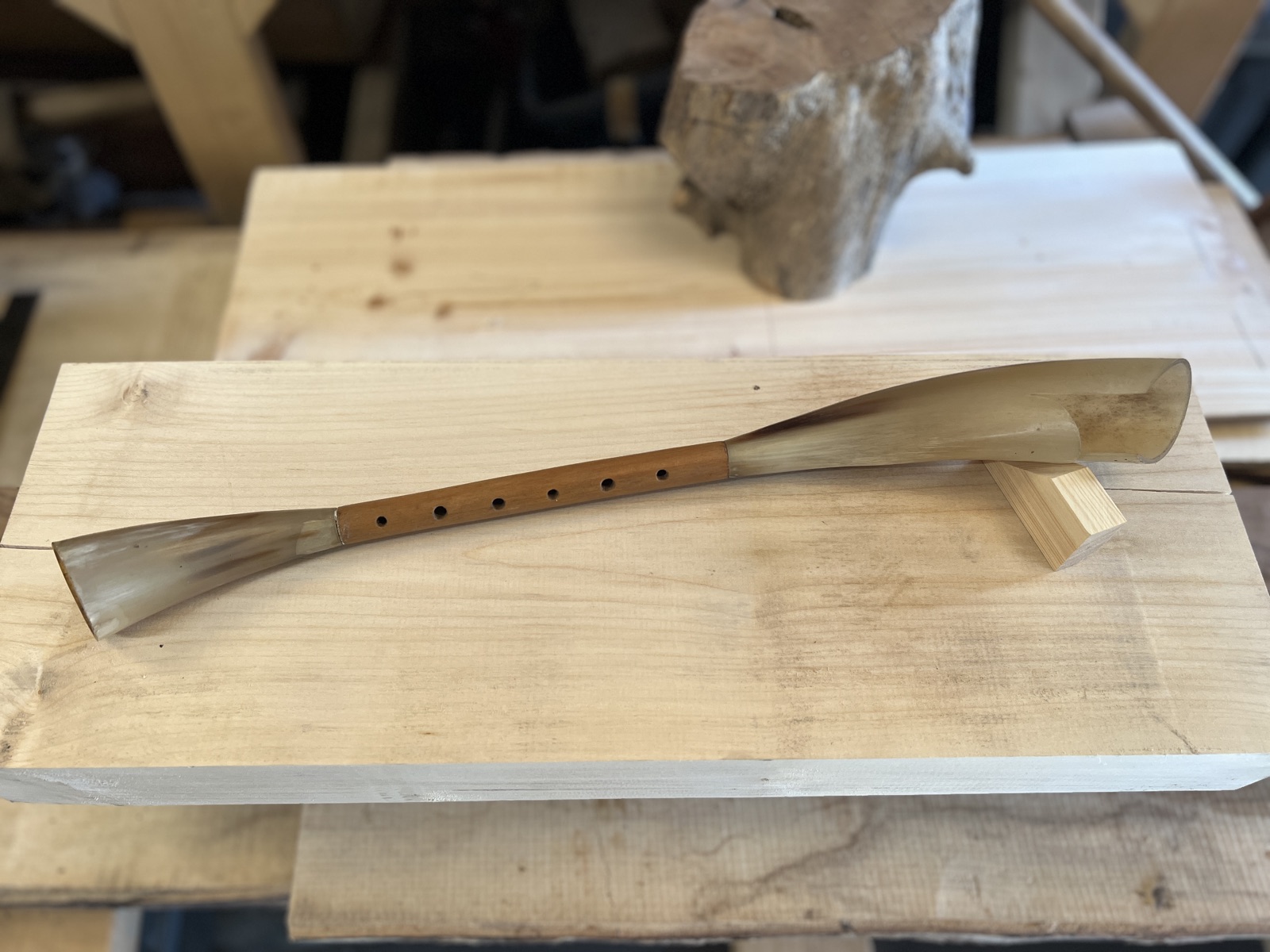
Elder, horn, and a single reed.
The body is a length of elder, its soft pith bored out and the bore drilled for a row of finger holes. Elder has been a pipe-maker's wood for centuries — easy to hollow, and sweet-toned once it is dry.
A mouthpiece of cow horn caps one end, housing a single beating reed; a larger horn is flared at the foot as a bell, to gather the sound and cast it out. Each is fitted, finished, and tuned by hand.
It is played with a steady breath — often a circular one — so that the reed never stops sounding, in the old droning manner of the hornpipe.
To follow the pibgorn further.
- Clera — the traditional instruments of Wales
The society for Wales's older instruments — the pibgorn, the crwth and the pibau among them — and the players keeping them in the air.
- The pibgorn, in brief
A plain account of the Welsh hornpipe — its horn bells, its single reed, and its long near-silence — for anyone meeting it for the first time.